
Irisviel's Einzbern Alchemy.
AlchemyWP (錬金術, Renkinjutsu?) is one of the Magecraft Systems, which focuses on the manipulation of the flow of matter.[1]
Mechanics
Circe states that Alchemy is all about gaining control over bodies, life, and souls; with turning leadWP into goldWP being a happy by-product. As such, Alchemy can also double as Necromancy.[2]
Alchemists, unlike other magi, do not practice rituals, but discover them.[3] Some even say that Alchemy is the origin of chemistryWP,[4] which has some grounding: for example, the phosphorusWP that was used to make old matches was discovered from an old alchemical experiment involving evaporating urine.[5]
Alchemy can be divided into two types: the Alchemy practiced at the Egyptian Atlas and the Alchemy practiced at the western Clock Tower and the Prague Association.[1][3][6][7][8][9][10] While both subscribe to the idea that "everything flowsWP,"[6] they differ in goals and methods.
Western Alchemy


The Alchemy adopted by the Clock Tower was developed after the initial influx of Alchemy in the West during the Middle AgesWP,[1][10] most notably by Paracelsus von Hohenheim, who deeply influenced the development of Alchemy as a Magecraft Foundation and its engraving in the World.[11][12] This form of Alchemy is sometimes called Modern Alchemy (現代錬金術, Gendai Renkinjutsu?).[7][8][9] It has an objective to turn base metals[1] like fool's goldWP or lead[3] into actual gold, and, following that metaphor, to transform the lowly human into a being capable of comparable to God.[13]
It is thus concerned with the "transformation of matter": not just minerals, but states of matter like liquid or gas, or even a conceptual form that doesn’t exist in this world, all of it is within the grasp of Alchemy.[14] PhlogistonWP, Ether, and Galvanism are concepts falling under the domain of Alchemy.[15] The Alchemists of the Clock Tower created products similar to the Homunculi of the Einzbern by this merging of Alchemy with Western Magecraft.[1] Finally, this form of Alchemy includes spells like Transmutation and Flash Air.
Transmutation


Transmutation is the core part of Alchemy, and is the process of changing one thing to something else, such as elements, shapes, materials, and ones self. Similar to changing the shape of an object from a spork to a fork, or changing something solid to either liquid or gas. It can convert resources into magical energy or items. It is this property where the idea emerged that one can alter base similar materials into more valuable ones such as coal to gold.
Galliasta's system of Transmutation Magecraft uses the principle of exchange in the form of a "primitive curse" to generate magical energy from human sacrifices. Atrum Galliasta has used his finances and all his knowledge to design the Magical Workshop to make the system more modern and efficient by skipping the incantation process, allowing a ritual that would take a month and require a transmutation incantation of a three-day and night duration to be completed in an instant. The sacrifices are placed in cylinders, liquefied, and then transferred into a crystal. It is more efficient with "pure" raw materials, so he is shown using a stock of a number of young girls brought in from elsewhere rather than abducted from Fuyuki.[16]
It is, however, inferior to a similar process performed with Age of Gods magecraft performed by Medea, merely using the mana in the air.


Homunculus
- Main article: Homunculus
Philosopher's Stone
- Main article: Philosopher's Stone
Azoth Sword
- Main article: Azoth Sword
Material Transmutation
- Main article: Material Transmutation
A branch of magecraft that interacts with the properties of objects. It includes spells such as Projection, Alteration, Reinforcement, and Structural Grasping.
Flash Air
- Main article: Displacement Magecraft
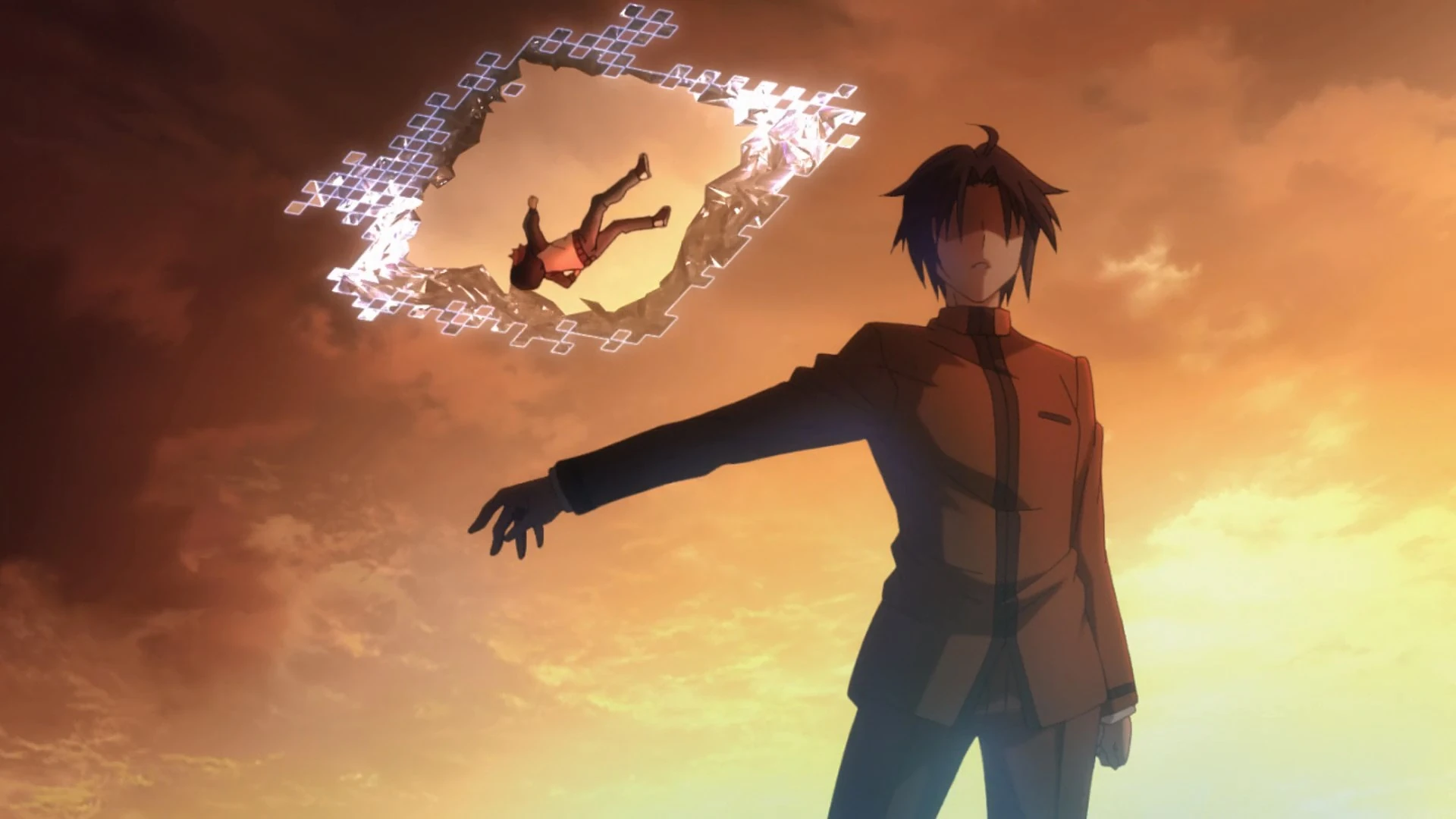
Julian Ainsworth's high level displacement, using the space underneath Shirou's feet to make him fall from the sky.
Displacement Magecraft is derived from Alchemy, and is a magical shortcut to swap and replace things with others. However due to Displacement's Magecrafts nature and equivalent exchange whatever is swapped suffers some form of degradation.
One of the basics of Displacement Magecraft is "Shape Replacement", which is replacing the shape of an object with another shape, such as a spoon into a fork or a spork into a detailed rose flower. This is in definition a form of Transmutation that alters an objects form to something else.
It is ideal for whatever is swapped to be identical or close to identical to whatever is being swapped. For example "Goredolf A" is about equal or 90% equal to "Goredolf B" as such they can swap locations.[17] Air or space which normally has nothing but more of itself is an ideal subject for this, but is the expertise of the Ainsworth, who are also known to have a more optimal method to avoid severe degradation.
Einzbern Alchemy


- Main article: Einzbern Alchemy
The Einzbern's kept themselves separate and isolated from most outside affairs. As disciples of the Third Magic they heavily researched how their Alchemy could lead to it, and eventually managed to become experts in the transference of flow and power.
The magecraft of the Einzbern family is based on "transmutation of matter", and focuses mostly on the creation and use of matter.[18] Known applications of their magecraft include coining of Homunculus,[19] creation of the vessel for the Holy Grail,[20] and Transference of Consciousness spells.[21][22][23] As such, the magi of the Einzbern are not actually fit for direct combat, although that does not mean that they are weak.[24]
- Main article: Einzbern Homunculi
Transmutation is the field in which the Einzbern truly specialize in, to do things like manipulating the configuration of noble metals. Irisviel developed an application of this for combat-purpose use: to pass magical energy through metal-wires to shape the threads accordingly with her mental images. The precision of the shapes and the fluidity with which she can change between them serves as a statement on how the Einzbern magecraft excels in Alchemy.[24][25]
Atlas Institute
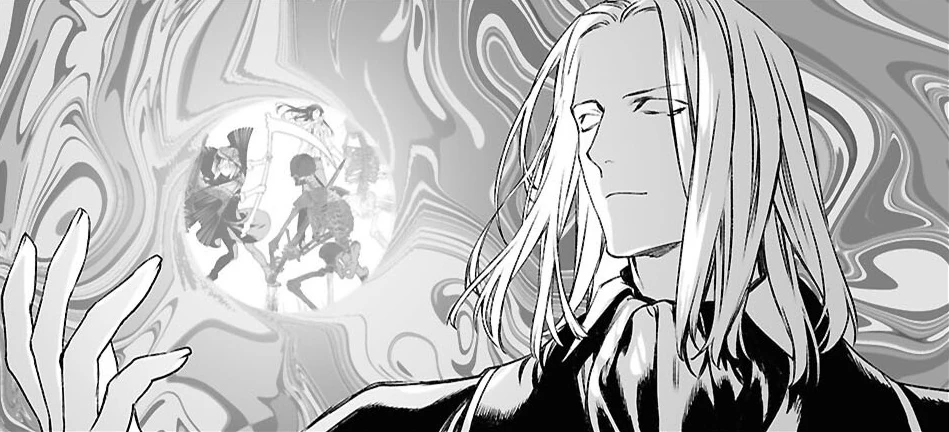

Zepia Eltnam Atlasia using his Alchemy to calculate and scry into the future.
Atlas Alchemy delves into the conversion of phenomena, applying it to the future. Their Alchemy is an advancement of the metallurgy of ancient Egypt, the root of the discipline, and has not been influenced by Western Magecraft like Clock Tower Alchemy.[1] It is the progenitor of magecraft[1][7][8][9][26] due to its ties to the progenitor of magecraft in Egyptian mythology, the goddess Isis,[26] and is focused on investigating the true principles of the world.[8][9][26]
The ultimate goal of the Alchemists of Atlas is set closer to the original ideology, the "transformation of events",[1] and have no interest in the transmutation of Elements,[3] as they consider mere "transformation of matter" as nothing more than a primitive art far removed from their ideals.[1] This form of Alchemy includes spells like Memory Partition and Thought Acceleration. The Six Sources, the founding families of the Atlas Institute are known to specialize in their own system of Alchemy that explore the potential of the body, called Traditional Feature.[27] While Atlas alchemists have little to no Magic Circuits, the Six Sources possess special cells that produce Magical Energy which functions only within their bodies. This ability, their Traditional Features, have been internally developed by the six families in order to awaken the abilities of their bodies.[28]
Etherlite
- Main article: Etherlite
The Traditional Feature used by the Eltnam family.[29] It allows them to manipulate their nerves and create weapons out of them.[30] They are able to manipulate an artificial Nervous systemWP with the shape of a nanoWP-scale filament one micronWP thick that cannot be seen with the naked eye.[31][32][33][34][35] They can attach to their opponent's skin, integrate with their central nervous system,[31][32][35] and read their thoughts and memories.[36][37][35] In battle they function as sharp whips or threads, someone of the caliber of Zepia Eltnam Atlasia is able to create and utilize Etherlites with properties similar to Sword Saints, allowing him to cut through nearly anything.[38]
Exoforms
The Traditional Feature used by the Crudelis, which allows them to manipulate their own bones to make bone Familiars and constructs.[30]
Moleculeface
The Traditional Feature used by the Ishtario family, which allows them to manipulate their own skin.[39] They can heat up their skin, paint surfaces just by waving their hand over them, manipulate the color, viscosity, transparency, and durability of their skin. It is speculated that they can also manipulate hair since skin, and nails are part of the same system.[39]
Memory Partition


Sion using two of her seven Partitions to maintain Riesbyfe Stridberg existence.
Memory Partition (分割思考, Bunkatsu Shikō?) is an ability used by the superior Alchemists of Atlas. Paired with Thought Acceleration, the very proof that one is an Atlas Alchemist, it is the ability to partition their thoughts to form multiple independent thought processes. While normal people can only have a single "room" in their brain and focus on one thought, Memory Partition can divide this one room into several. The prerequisite for the superior Alchemists of Atlas is at least three rooms, while five is on the level of a genius. Sion Eltnam Atlasia can manage seven partitions, while a past Academy Director had achieved eight partitions.[3]
It is different than having multiple independent machines in their heads because, while there are multiple processes, they work toward one goal. They manage different problem sets, but work together to generate one overall solution. While machines can calculate on the same level, nothing else compares when used for problem solving. The limit of an average alchemist is one thought into multiple rooms, but superior Alchemists can perform first−order tetrationWP of their thought into rooms.
The rooms are synergistic, so four partitions allows for 256 thought processes. As they work towards one goal, it does not allow for 256 separate calculations. Sion uses it to calculate the opponent's movements in battle, think out multiple separate ideas at once, and calculate data she gathers.[3] Latio Crudelis Hiram uses Memory Partition to control her bone Golems.[40]

.jpg)
Captain Nemo using Memory Partition to create the Nemo Series multiple different bodies each with their own skills and personalities.
The historical Ptolemy was born with an innate ability similar to Memory Partition, but closer to something like ESP as it did not require Mystery. According to legend, Ptolemy would be able to thoroughly analyze others with only a short exchange. This talent would cause him to come into contact with Atlas because of the similarities.[41] Due to her mentor being a student of Atlas, Misaya Ouji leads her mindless Fairy Familiars while conducting multiple parallel cognitive processes.[42] Nemo, being the Servant of Sion Eltnam Sokaris, can also use Memory Partition. For him, it manifests each partition into different bodies, the Nemo Series. There are six types in total, and although there is only one of five types, for the Nemo Marines there is always twelve which can increase to a maximum of 24 depending on Nemo's needs,[43] making the total number of Nemo partitions 29.
In a similar process to how Nemo uses Memory Partition to divide his thought partitions into several bodies, the same principle can reversely be used to store thought partitions. For example, Sion Eltnam Atlasia used two of her seven partitions to store Riesbyfe Stridberg's soul and maintain her existence after she became something similar yet different to a Tatari Manifestation stored originally in the TATARI Reality Marble. This state of being is similar to Riesbyfe being Sion's familiar, since her existence depends on her. Sion refers to the process as a load being pressed on her that weakens her abilities but isn't too severe.
Thought Acceleration
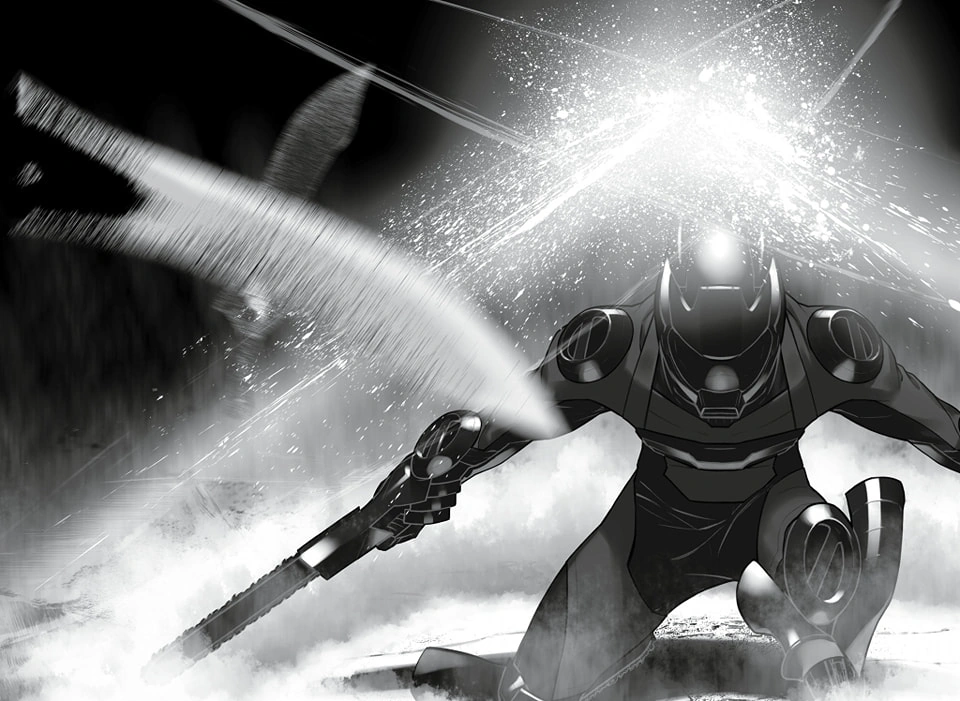

Juste using Thought Acceleration to increase his battle planning and reflexes during combat.
Thought Acceleration (高速思考, Kōsoku Shikō?) is the main magecraft of Atlas Alchemists. Fast thought is only a prerequisite to it, and it is truly the ability to multi−expansion diagrams. Thought Acceleration is the proof of an alchemist, while Memory Partition is a proof of their facilities.[3]
Chinese Alchemy

.jpg)
Lostbelt Qin Shi Huang making a blade from Mercury.
The Thought Magecraft of the Xian also includes Alchemy. The Shenxian Laozi cast Sun Wukong into his Trigram Furnace for 49 days after the Monkey King ate the peaches and elixir of immortality which was distilled through Alchemy. While it's commonly viewed as a punishment, from a magus perspective that tale describes the process in which the divine elixir of immortality is assimilated into Wukong. The time for the Ergo experiment was based on that 49 days as that represents the time it takes for a soul to reincarnate after death in BuddhismWP, and conceptually represents the time until the end of an era. It took a total of 2300 years for the era to live and die, during that time Ergo was in the pod like a god waiting for reincarnation, from around the end of the Age of Gods until around the expected end of modern magecraft.[44]
Practitioners
- Einzbern
- Justeaze Lizrich von Einzbern (Master of Northern Alchemy)
- Jubstacheit von Einzbern
- Irisviel von Einzbern
- Illyasviel von Einzbern
- Sella
- Atlas
- Main Six Families
- Juste
- Rani VIII
- Not Atlas, but can use portions of their Magecraft
- Misaya Ouji (Not Atlas, but was taught Memory Partition by Satsuki Kurogiri)
- Hakuno Kishinami (Male)/(Female) (The Sparks Route∞ skill is a highly advanced Thought Partition)
- Captain Nemo (Sion granted Nemo Memory Partition during his Summoning.)
- Olga Marie Animusphere (Contains minor knowledge of Atlas Alchemy)
- Ainsworth
- Chinese Alchemy
- Musik family
- Gordes Musik Yggdmillennia (Was granted minor knowledge of Einzbern Alchemy in Apocrypha)
- Goredolf Musik
- Atrum Galliasta (Transmutation that involves using subordinates or other individuals.)
- Bazdilot Cordelion (Stole Atrum's Blueprints for his Transmutation Factory.)
- Doctor Heartless
- François Prelati/Francesca Prelati
- Georg Faust
- Gesell Tolman
- Gilles de Rais (Studied Alchemy after Jeanne's death, though was not a Magus.)
- Heine Istari
- Kayneth El-Melloi Archibald
- Kirei Kotomine (Was taught by Tokiomi Tohsaka)
- Lemina Eltfromm Yggdmillennia
- Michael Roa Valdamjong
- Mori Souiken (Knows Einzbern techniques for creating Homunculi,[45] and studied various magecrafts in China.[46])
- Nigel Saward (Original magecraft that uses Alchemy as a base.)
- Paracelsus von Hohenheim
- Seiji Jinga
- Shinji Matou (Studied the Alchemy books in the Matou's possession.)
- Shizuri Isemi
- Waver Velvet
References
- ↑ 1.0 1.1 1.2 1.3 1.4 1.5 1.6 1.7 1.8
[] Fate/complete material III: World material - Theory of Magic - The two great forces in the Thaumaturgy world: Mage's Association, p.051 “Clock Tower”, the Highest Institute of Magic
The Clock Tower, the core of the Association and in fact what could also be said to be the Association itself, is based in the British museum of London. Magi from all over the world gather and devote themselves day and night to the study of magic, while at the same time, are busily tripping over and being tripped over by other factions and competing for power and budget. The organization is anything but harmonious and has a complicated bizarre structure, but the magical research there is without doubt the leading edge.
Below the building, there is the magi’s research area which includes studies and archives. It is only a venerable museum to normal people of course, but at the deepest part, there is a special area (prison?) called the “Bottom of the Bridge” where the Association confines many sealing designated magi deemed to be “dangerous because their talents were too outstanding.” Also, apparently the Gazamy the “Evil Spook”, treated as the number one disaster in the Association, is locked up at the bottom of the London tower.
The person of highest position in the Clock Tower, the “Director” has been the same person for the 2000 years since the founding of the organization, and because of this is thought to be something more than human.
The organization handling patents relating to magic is also the Clock Tower, and the current finances of the Tohsaka family is being by covered by the patent royalties that are being transferred to their account.
Ranks of Magi
A magus is given a “rank” that matches his ability. The highest is said to be Crown (Grand), but details on it are unknown. Note that Lord El-melloi II, lecturer at the Clock Tower who has produced many Grands among his pupils, is stuck in the mediocre “fourth rank” for some reason.
Color ranks
Separate from the normal ranks, color-based titles are given to those that have become special.
The highest are red, blue, and yellow based on the three primary colors. After that, there are the combined colors of orange, purple, green, black, and so on. The further down you go, the less your rank is. Note that there is no rule about only one person for each color. The Association will, without any stinginess, award a color to you if you’re a magus of great stature or one with an unusual talent.
Sealing Designation Enforcers
If you receive a “sealing designation”, you will be confined and even your magic research will be gone, not to mention your freedom. Thus, the person given that designation will of course desperately resist that and won’t stop fighting. To forcefully retrieve magi who were qualified enough to be given a sealing designation, the Association dispatches “Enforcers.” There are around 30 of them total, and Bazett is one of them.
Lords, consuming their time in power struggles
In the Magic Association, no rather, the Clock Tower, there are a number of families that hold sway. They are called Lords and are the objects of fear. There are three major families of Lords and about 20 families of relatives. These families are well-known even in normal society. The history of one family is at shortest 500 years and the longest is over 2000 years. They have been plotting and plotting since a staggeringly long past.
The Sea of Estray, together with the Atlas Institute, is an organization called the original form of the Magic Association.
Among the founders of the Magic Association, there had been many heretical magi who were exiled from the Sea of Estray and the Atlas Institute and had no place left to go.
The base of the Sea of Estray is in Northern Europe. This base, with the nickname of the Moving Stone Coffin, is itself a moving mountain range. Normally it is wandering at sea as its name suggests, but sometimes it comes up on dry land.
It seems they research mainly body alteration, but the specifics are unknown.
*What is an alchemist?
One who studies the flow of matter. That is what an alchemist is. The alchemists of the Clock Tower created products like the homunculi of the Einzbern by merging with western magery.
However, the ultimate goal of the alchemists of the Atlas Institute is set even closer to the original ideology, as the "transformation of events". The often spoke-up "transformation of base metal to gold" in alchemy is, to the members of the Atlas Institute, mere "transformation of matter" and is nothing more than a primitive art far removed from their ideals. Their alchemy is an advancement of the metallurgy of ancient Egypt, the root of the discipline, and has not been influenced by western magery like the alchemy that the Clock Tower magi handle. - ↑ Fate/Grand Order: Epic of Remnant - Salem: The Forbidden Advent Garden - Section 3: Second Knot
- ↑ 3.0 3.1 3.2 3.3 3.4 3.5 3.6 Melty Blood - Hologram Summer route - Block C: 2/The Alchemist of Atlas - Extra Alchemist
- ↑ Fate/Grand Order - London: The Death World in the City of Demonic Fog - Section 3: The Demonic Fog Laughs
- ↑ Lord El-Melloi II Case Files Volume 1: case. Adra Castle Separation - Chapter 4 Part 2
- ↑ 6.0 6.1
[] Tsukihime Dokuhon PlusPeriod - TSUKIHIME Dictionary: Serpent [Colloquial term], p.188 Serpent [Colloquial term]
Roa's nickname. The Dead Apostles gave it to him, in reference to the way he lives on through reincarnation. Given that he dabbled in alchemy, it's quite fitting.
Of course, when you hear alchemy the first thing you think of is Sion, but Sion is an Atlas alchemist, which is something totally different from those alchemists that devoted themselves to Western sorcery. It seems that the Atlas alchemists don't think much of Roa for that very reason, even though they both subscribe to the common idea that "everything flows". Also, contrary to what you may expect, Sion too is possessed of this same elitism, and looks down on Roa on principle.
…Huh? Then are Sion and Ciel actually on bad terms…?蛇【俗称】
ロアの俗称。転生し生き続ける彼を、死徒たちはそう名づけた。元から錬金術をかじっていたロアには相応しい俗称といえるだろう。
錬金術と言えばシオンだが、シオンはアトラスの錬金術師なので西洋魔術に傾倒した錬金術師たちとは別物。万物、物質の流転は共通のテーマだが、アトラスの錬金術師はロアを軽視しているようだ。シオンもああ見えて選民思想が強いので、ロアを見下している節がある。……あれ?シオンとシエルつて実は仲悪い……? - ↑ 7.0 7.1 7.2
[] Melty Blood Act Cadenza PS2 Manual - Dictionary: The Atlas Academy [Place name], P.060 The Atlas Academy [Place name]
The institute Sion belonged to, and one of the three major branches of the Association. Located in the Atlas mountains of Egypt, it is a place where those dedicated to the study of alchemy gather. Colloquially known as the Giant's Pit.
Unlike the modern alchemy that rose to prominence in the middle ages, the alchemy studied by Atlas could be said to be the progenitor of sorcery. For some reason they are on extraordinarily bad terms with the Prague Association, and even the Clock Tower, the very heart of the Association, keeps their distance.
In order to avoid the "end" proven by their first director, they endlessly create and dispose of weapon after weapon.
There is a saying in the Prague Association: "Lift not the seal of Atlas, lest ye destroy the world seven times over."
…The reason being that the weapons created there to save the world are ultimately nothing more than tools that will further its destruction.アトラス院【地名】
シオンが所属していた学院で、魔術協会三大部門の一つ。エジプトはアトラス山に門を構える、錬金術師の学院。俗名として巨人の穴蔵とも。
中世から主流となった現代錬金術とは異なる、魔術の祖と言われる錬金術師の集まり。プラハ協会とは致命的に仲が悪く、魔術協会の心臓部·時計塔からも煙たがられている。
初代院長が証明してしまった“終末”を回避する為の兵器を延々と作り上げ、未来永劫に廃棄し続けている。
曰く、アトラスの封を解くな。世界を七度滅ぼすぞ——とはプラハの錬金術師の言。世界を救う為に作り上げた兵器は、更に惨たらしく星を焼く道具にすぎなかったのだ。 - ↑ 8.0 8.1 8.2 8.3
[] Tsukihime Dokuhon PlusPeriod - TSUKIHIME Dictionary: Atlas Institute [Place name], p.175 Atlas Institute [Place name]
One of the three major branches of the Association. Located in the Atlas mountains of Egypt, it is a place where those dedicated to the study of alchemy gather.
Unlike the modern alchemy that rose to prominence in the middle ages, the alchemy studied by Atlas could be said to be the progenitor of magecraft, and an attempt to unravel the truth of the world.
For some reason they are on extraordinarily bad terms with the Prague Association, and even the Clock Tower, the very heart of the Association, keeps their distance. They are colloquially known as the Giant’s Pit.
In order to avoid the “end” proven by their first director, they endlessly create and dispose of weapon after weapon.
There is a saying in the Prague Association: “Lift not the seal of Atlas, lest ye destroy the world seven times over.”
…The reason being that the weapons created there to save the world are ultimately nothing more than tools that will further its destruction.
Though calling it “one of the three major branches of the Association” sounds nice, in reality it is more like an independent think tank. They have been known, on rare occasions, to loan out their alchemists to other mage’s associations and even the Holy Church upon request.
In order to hire an Atlas alchemist, however, one of the written contracts issued by the Atlas Institute is required. Only seven of these contracts were ever issued, and the Atlas Institute considers their recovery a top priority.アトラス院【地名】
魔術協会三大部門の一つ。エジプトはアトラス山に門を構える、錬金術師の学院。
中世から主流となった現代錬金術とは異なる、魔術の祖、世界の理を解明する錬金術師たちの集まり。
プラハの協会とは致命的に仲が悪く、魔術協会の心臓部・時計塔からも煙たがられている。通称、“巨人の穴蔵”。
初代院長が証明してしまった“終末”を回避する為の兵器を未来永劫に作り上げ、廃棄し続けると言われている。
曰く、アトラスの封を解くな。世界を七度滅ぼすぞ―――とはプラハの錬金術師の言。
世界を救う為に作り上げた兵器は、更に慘たらしく星を焼く道具にすぎなかった訳である。
三大部門と聞こえはいいが、実際は独立した頭脳集団。希に、他協会や聖堂教会からの要請で錬金術師を貸し出す事もある。
アトラスの錬金術師を借り受けるには、過去アトラス院が発行した“契約書”が必要となる。七枚しか発行していないこの契約書を回収する事がアトラス院の当面の目的だとか。 - ↑ 9.0 9.1 9.2 9.3
[] Fate/EXTRA material - Encyclopedia: Atlas Academy [Place name], p.155 The Academy at Atlas【Location Name】
The Atlas Institute is an association of magus and alchemists based somewhere in Egypt’s Atlas Mountains. It is also known as the Giant’s Pit.
Of the three divisions of what had once been the Mage’s Association, the institute of accumulation and measurement.
They were a group of practitioners of alchemy, not of the modern alchemy that became dominant since the medieval times, but the progenitor of magecraft, the alchemy that investigates the truth of the world.
They’re not so much as mages as they are individuals with abnormal powers who treat their own bodies like humanoid machines, using them like vessels for working their minds more accurately, more powerfully, more quickly.
They believed that humans are a rare sort of computers with motor functions (the five senses), that we humans are intelligent lifeforms that evolved to collect and analyze information and directly solve the problems created from that as manual labor.
The correctness of this idea was proven unexpectedly in the world of Extra where magecraft died out.
The alchemists of Atlas have poor magic circuits, and did not lead their lives relying on magic power.
As they did not rely on it (or to be more precise, could not), they were able to continue their pursuit of knowledge as disciples of magecraft even after the depletion of mana.
However, for a long time children had stopped being born, and the Atlas Institute, with its old alchemists taking their lives, was at the end of its ropes irrespective of the mana depletion.
All that remains of the Atlas Institute is a single homunculus. The last Atlasian succumbed to disease after creating the homunculus, and only her creations were left in her cave.
The Atlas alchemists disappeared, and their research facilities which were built using unknown techniques stretch out in an underground city which is now, more or less, a giant graveyard.アトラス院【地名】
エジプトはアトラス山脈にある魔術師・錬金術師の協会。巨人の穴倉ともいう。
かつて機能していた魔術協会───その三大部門の一つ、蓄積と計測の院。
中世から主流となった現代錬金術とは異なる、魔術の祖、世界の理を解明する錬金術師の集団だった。
魔術師というよりは自身の肉体をマン・マシーンとして扱う異能者たちで、自身の肉体を『正しく、強く、速く』知性を働かせるための容れ物として扱っていた。
人間とは運動機能(五感)をもった類い希なる計算装置である。情報を収集し、解析し、生まれ出る数々の問題に、労働力としてダイレクトに対応できるよう進化した知的生命体が我々人間である、というのが彼らの信条だった。
その正しさは魔術の絶えたEXTRA世界で奇しくも証明された。
アトラスの錬金術師たちは魔術回路が乏しく、魔力に頼った活動をしてこなかった者たちである。
魔力に頼っていなかった(正しくは『頼れなかった』のだが)彼らは魔力枯渇の後でも魔術の徒として探求を続けられた。
しかし長く次代の子供たちが誕生しなくなり、古参の錬金術師たちの自決死が続いていたアトラス院は魔術枯渇とは関係なく滅びようとしている。
アトラス院にはもはや一人のボムンクルスしか存在しない。最後のアトラスはボムンクルスを鋳造した後に病死し、洞窟には最後の作品だけが残された。
錬金術師たちが消え、未知の技術体系によって作られた研究施設だけが連なる地下都市は、さながら巨大な墓標のようだとも。 - ↑ 10.0 10.1 Lord El-Melloi II Case Files Volume 1: case. Adra Castle Separation - Chapter 1 Part 4
- ↑ Fate/Prototype: Fragments of Blue and Silver Volume 5: Knight of Fate Arc - Act 5 Part 4-A (translated by PhoenixRising at Beast's Lair)
- ↑ Fate/Grand Order material III p.052-059 - Von Hohenheim Paracelsus (translated by Kinalvin)
- ↑ Lord El-Melloi II Case Files Volume 2: case. Twin Towers of Iselma (Upper) - Chapter 4 Part 1
- ↑ Lord El-Melloi II Case Files Volume 1: case. Adra Castle Separation - Chapter 2 Part 3
- ↑
[] Fate/complete material IV: Extra material - Fate/Apocrypha - Frankenstein, p.332-333 Frankenstein, Frankenstein's Monster
Frankenstein, Frankenstein's Monster is the cyborg that appears in Mary Shelley's novel. Normally slow to respond in interpersonal interaction, she exhibits surprising agility and toughness in combat; in Berserk Mode, she executes commands with extreme faithfulness. Due to a lack of skill in expression, and fearful of her own monstrous nature, she maintains a shy silence that conceals her high intelligence and empathetic capabilities (except for the emotion of sorrow). Extremely mindful of energy conservation; if her Master leaves the lights on in the bathroom after use, she will turn it off for him.
- Class:Berserker
- Source:Novel "Frankenstein: or The Modern Prometheus"
- Location:Europe and the United States,
- Alignment:Chaotic Neutral
- Gender:Female
- Height:170cm
- Weight:40kg
- Armament: Mace
Illustrations: Takeshi Okazaki
Creator: Meteor Hoshizora (TYPE-MOON)
Legend
An artificial lifeform created by the researcher Frankenstein; she was rejected by her creator when she professed a love for him. Fearful of her interests, her creator dismembered her and escaped to his birthplace in an Alpine village outside Geneva. Reassembling herself and tracking him on instinct, she began to recognize over time that though she was kind in nature, she was also an existence of cursed monstrosity. The understanding of the reasoning behind her creator's rejection drove her to anger and despair, and she took the lives of his family members, pursuing him across Europe in the aftermath. Her creator eventually underwent a mental breakdown and took his own life. At the loss of the subject of her love, hopes, and hatred, the automaton drowned herself in the icy waters of the Arctic.
Status
- STR: C
- CON: B
- AGI: D
- MGI: D
- LCK: B
- Noble Phantasm: C
Skills
- Scream of the False Lifeform (Scream of Terror)
The Servant is capable of emitting an immense scream, temporarily robbing enemies and allies alike of their ability to think and respond; those who do not expect it or are incapable of the mental resilience to withstand it may temporarily lose their ability to breathe. The effectiveness of the skill is increased with activation of Mad Enhancement. Incidentally, in Berserk Mode, the Servant expresses approval with the phrase "Yaaa," and disapproval with the phrase "Uiii," but it is impossible to discern anything but madness.
- Galvanism
Unrestricted conversion and accumulation of magical energy and bio-electric energy. Thaumaturgical attacks involving no material existence -- wind manipulation, energy bullets, beam attacks -- are converted to electricity and rendered without effect, discharged into the environment. Absorbed electricity may be used to implement rapid self-repair and physical attribute reinforcement. Like PhlogistonWP and Ether, the concept of Galvinism, which explains organic activity as a bio-electric process, falls under the domain of Alchemy.
Noble Phantasm
- Bridal Chest: A Maiden's Chastity Strength: Medium
A large mace used by the Servant as a striking weapon, which gives off discharges electricity with the appearance of tree branches. In reality, the Servant's reactor core / heart is contained within the large spherical bulb, and the fin on the opposite end remotely transfers energy to the Servant's main body. With high efficiency, the implement continuously gathers energy wasted by the Servant or present in her surroundings, and is constantly manifested outside of combat to power her. If exposed to a high-magical energy environment -- for example, in the midst of combat -- the function of Galvinism and the Bridal Chest combine to qualify the Noble Phantasm as a "Type II Perpetual Motion Engine."
- Blasted Tree: The Lightning Tree of Crucifixion Strength: Large
Use of the Bridal Chest in a suicide move -- the fin of the mace is planted into the ground, and the reactor's limiters are completely released, discharging all gathered electricity into the surrounding environment as an area of effect attack with target homing; momentarily giving the Noble Phantasm in the silhouette of a towering tree. May be implemented from the Servant's own body rather than the Bridal Chest if the enemy force is a single opponent within short range. Use of this technique results in permanent deactivation, but there is a low probability that a second Frankenstein's Monster will be materialized in the wake of the attack. However, in death, it would be impossible for the Servant to witness the results of her actions.
フランケンシュタインの怪物
フランケンシュタイン
メアリー・シェリーの小説に登場する人造人間。もっぱら寡黙で、反応も鈍いが。戦闘時は俊敏に動き、素晴らしい機動力とタフネスさを発揮する。暴走状態でなければ、命令に極めて忠実。感情を表す行為は自分の醜悪さにつながると恥じており、積極的に隠している。しかし知能は高く、人間の情緒を高度なレベルで理解している(ただひとつ、悲しみの感情がない)。節電に大変熱心で、マスターが入っているトイレの電気をこまめに切る。
- クラス:バーサーカー
- 出典:小説『Frankenstein: or The Modern Prometheus』
- 地域:欧米を中心とした、全世界
- 属性:混沌・中庸
- 性別:女
- 身長:170cm台
- 体重:40kg台
- 武装:メイス.
イラスト:岡崎武士
設定制作:星空めてお(TYPE-MOON)
伝説
科学者・フランケンシュタインが創り出した人造生命。創造主を父と敬慕したが、拒絶される。生まれてほどなく、彼女を恐れた父は、彼女を解体して故郷ジュネーブの山村へと逃亡した。その行方を辿る追跡行のうち、彼女は自分が優れた存在であると同時に醜い怪物であることを悟る。やがて彼女はフランケンシュタインの家族や無関係な人々の命を奪いながら欧州を転々として父を追い詰め、自分の伴侶となる存在を創造するよう迫った。しかし衰弱しきった父は恐怖に悶え苦しみ、狂死する。憎悪の対象と希望を同時に失った彼女は、この地上に生きる場所も許されることもないと嘆きながら氷の海へと消えた。
筋力値
- 筋力:C
- 耐久:B
- 敏捷:D
- 魔力:D
- 幸運:B
- 宝具:C
固有スキル
- 虚ろなる生者の嘆き
狂化時に高まる、いつ果てるともしれない甲高い絶叫。敵味方を問わず思考力を奪い、抵抗力のない者は恐慌をきたして呼吸不能になる。被害者の苦しむさまは、みずから首を絞めているかのように映る。彼女の唸りは「(はい)……ヤァァ……」、「(不満)……ウィィィ……」のように意味がこもっているが、スキル発動時は狂気しか感じられない。
- ガルバニズム
生体電流と魔力の自在な転換、および蓄積。魔光、魔風、魔弾など実体のない攻撃を瞬時に電気へ変換し、周囲に放電することで無効化する。
また、蓄電の量に応じて肉体が強化され、ダメージ修復も迅速に行われるようになる。生命活動を肉体に宿る電気で説明するガルバニズムの概念は、フロギストンやエーテルと同じく、錬金術のカテゴリーに属している。
宝具
- 乙女の貞節 - 威力:中
樹の枝状の放電流を纏う戦槌。先端の球体は彼女の心臓そのものであり、戦闘時以外も肌身離さず所持している。尾部のフィンと、本体側側頭部のフィンによって電力の供給が行われる仕組み。自分や周囲から漏れる魔力を効率よく回収し蓄積するため、周囲に余剰の魔力が豊富に発生し続ける戦闘時は、ガルバニズムと合わせて疑似的に『第二種永久機関』の動作をすることになる
- 磔刑の雷樹 - 威力:大
"乙女の貞節"を地面に突き立て、全リミッターを解除して行う全力放電。
聳え立つ大樹のシルエットで降り注ぐ、拡散ホーミングサンダーである。
敵が単体かつ近距離であれば"乙女の貞節"がなくとも発動可能。 放電後、使用者は完全に活動を停止する。つまり"死"である。この雷撃は、低い確率で第二のフランケンシュタインの怪物を生む可能性がある。もっとも、死亡する彼女はその結果を見ることができない。 - Class:Berserker
- ↑ Fate/stay night [Unlimited Bladeworks] - Episode 14: "Princess of Colchis"
- ↑ Fate/Grand Order - Ordeal Call: Prolouge
- ↑
[] Fate/complete material III: World Material - Theory of Magic - Magecraft: Family lineage of Magus, p.046 Family lineage of Magus
A magus lineage refers to the Magic Crest relay that passes down a Magic Crest through unilineal succession. Because this “relay” is so important, even if a family’s biological lineage has ceased, the magus lineage will be considered continuous if the crest is engraved onto somebody else’s body. Conversely, if the Magic Crest itself is lost, that magus lineage will be considered to have been severed even if a child with Magic Circuits still lives. Under normal circumstances, a magus selects the best qualified heir from within the family, and gradually passes on the Magic Crest to the successor.
The chosen successor to a magus lineage undergoes harsh training from a young age. Because an abnormal mindset and body are required to use magic, the training to instill these qualities is extremely severe, and it is not unusual to employ inhumane measures such as brainwashing and bodily modification. Thus, as the heir matures he or she inherits the lineage’s magic, knowledge, and research. Finally, a new master is born when the entirety of the Magic Crest is passed down from the predecessor.
Increasing the number of Magic Circuits
Magic Circuits are organs that one is born with, so there is no way to increase their number after birth. There are ways to transfer circuits, but it is rarely done because the success rate is low. Therefore, magus lineages will modify the parents’ bodies or take every measure possible at the moment of a child’s birth to create a successor with even one additional Magic Circuit. Therefore, the children of older lineages tend to have more Magic Circuits.
Inherited Magic Crests
Magic Crests are heirlooms within which the entirety of a lineage’s research is inscribed, from the first ancestor to the present. The crest contains the regrets of previous family heads’ inability to master their magic. A Magic Crest with a long history is a cursed crystallization impregnated with the feelings of countless preceding magi.
The Tohsaka family
Rin is the heir to the Tohsaka family, while Sakura was adopted by the Matou family as a successor. Because Tohsaka Tokiomi, the family head, died in the Holy Grail War, Rin inherited Tokiomi’s estate, including his magical patents, businesses in Fuyuki, and other assets. However, at this point most of Tokiomi’s magic crest had not yet been transferred to Rin. Tokiomi’s crest was extracted from his body by the Clock Tower, and given to Tokiomi’s next of kin to be transplanted into Rin.
Great magical families
Family name or Representative
Attributes
Explanation
Tohsaka Conversion One of the founding families of the Holy Grail War. They are disciples of the Sorcerer Zelretch, and the administrators of Fuyuki.
Makiri Absorption One of the three founding families of the Holy Grail War. They immigrated to Fuyuki and became the Matou family.
Einzbern Flow and transfer of power One of the three founding families of the Holy Grail War. They specialize in alchemy, particularly in the creation of homunculi.
Edelfelt Conversion Family from Finland. Like Tohsaka, prefer jewels magic, which uses the attribute of conversion.
Barthomeloi Almighty Old line even in the Magic Association. One of the families of the rulers, the Lords. Embodiments of perfectionism and aristrocracy.
Milyonecalion Prosperity One of the top magi in the magic world, known also by the name "Giver of All Sealing Designations". Details are unknown.
Jewel Killer Halting One of the remarkable magi in history, affiliated with the Sea of Estray, the mysterious prototype of the Magic Association.
Hermes Silis Atlasia Future Magus from one of the divisions of the Magic Association, the Atlas Institute, the association for the magi and alchemists of Egypt.
魔術の家系
魔術師の家系とは、一子相伝で魔術刻印を相続していく "魔術刻印のリレー”のことを指す。 この"リレー”こそが重要であるため、 生物学的な血筋が絶えたとしても、 魔術刻印が他人の肉体に受け継がれてさえいれば、その魔術師の家系は続いているといえる。 また、 魔術回路を持った子孫が存続していたとしても、魔術刻印が失われてしまったなら、その家系は魔術的に断絶したに等しい。 とはいえ、 通常であれば魔術師は自分の血族から優れた素養を持つ後継者を選択し、魔術刻印を連綿と受け継がせていくことになる。
また、後継者として選ばれた子供は、幼い頃より厳しい鍛錬を強制される。 魔術の行使に必要な精神と肉体は常識を外れたものであるため、 それに耐え得る心身を手に入れる鍛錬は過酷を極め、 洗脳や肉体改造のような非人道的な手段すら珍しくないのだ。そうして成長と共に、 魔術や、それに付随する知識と研究を受け継ぎ、最終的に先代の魔術師からすべての魔術刻印を受け継ぐことで新たな当主が誕生する。
魔術回路の増やし方
魔術回路は生まれ持った器官であり、 後天的に増えることはない。 移植方法はあるが、成功率が低いために行われることは少ない。そのため、 魔術師の家系は親の肉体を改造、 あるいは子供が生まれる際に手を尽くし、1本でも魔術回路の多い跡継ぎを誕生させようとする。 よって、 古い家系の子供ほど魔術回路が多い傾向がある。
遺産としての魔術刻印
魔術刻印は、魔術師の家系の始祖より現在に至るまでのすべての研究成果が刻まれた受け継ぐべき遺産”である。 そこには歴代当主の"魔術を極められなかった"という無念の想いも含まれている。 古く長い歴史を持つ魔術刻印は、極めて高い価値と同時に、歴代の魔術師たちの無数の想いを宿した呪いの結晶ともいえるだろう。
遠坂家の場合
遠坂家では長女の凛が後継者となり、 次女の桜は養子に出されて間桐家の後継者となった。 当主である遠坂時臣が聖杯戦争で早世したため、凛は時臣が申請した魔術的特許や冬木市の商業用地などの遺産を受け継いだが、 この時点で時臣の魔術刻印は、殆ど凛に刻まれていなかった。 そのため、時臣の魔術刻印は時計塔で遺体から摘出され、 時臣の知己の手を経て凛に移植されている。
魔術の名門
家名 or 代表者
特性
解説
遠坂 転換 聖杯戦争を創始したうちの 一家。 魔法使いゼルレッチを 大師とし、 冬木を管理する。
マキリ 吸収 聖杯戦争を創り出した始ま りの御三家のひとつ。 冬木に 移り住み、 間桐家となった。
アインツベルン 力の流転・転移 聖杯戦争を始めた御三家の ひとつ。 錬金術、 特にホムン クルスの製造を得意とする。
エーデルフェルト 転換 フィンランドの名門。 遠坂 と同じく、転換の特性を使用 した宝石魔術を好んで用いる。
バルトメロイ 万能 魔術協会でも古い血筋 配者であるロードの一家。完璧 主義かつ貴族主義の体現者。
ミリョネカリオン 繁栄 "封印指定総与"のふたつ名 で知られる、魔術世界屈指の 魔術師。 委細は不明。
宝石殺し 停止 魔術協会の原形とされなが らも謎多き彷徨海に所属す る、稀代の魔術師。
ヘルメス・シリス・ アトラシア 未来 魔術協会の一部門 エジプ トにある魔術師&錬金術師の 協会 アトラス院の魔術師。.
- ↑ Fate/hollow ataraxia - Other - Einzbern Castle - Ghost Gossip Glamorous
- ↑ Fate/stay night - Fate route - Day 13: infinity arms - You're my only star
- ↑ Fate/stay night - Heaven's Feel route - Day 6: beautiful (I) - Winter castle - Ilya (II)
- ↑ Fate/stay night - Fate route - Day 10: skyscraper - Bad End: Nutcracker doll
- ↑ Fate/stay night - Fate route - Day 11: DragonSlay - Bad End: Dress of heaven
- ↑ 24.0 24.1 Fate/Zero Volume 2: The Mad Feast of Kings - Act 7 Part 1 -130:44:57
- ↑
[] Fate/Zero Animation Visual Guide I: The Fourth Holy Grail War Glossary: shape ist Leben [Magecraft Term] shape ist Leben [Magecraft]
Manipulation and transmutation of matter. Magecraft handed down in the Einzbern family to shape precious metals. Irisviel uses it when fighting Kirei. By passing magical energy through wires it is used to transmute a giant wiremesh falcon as a makeshift homunculus.shape ist Leben【魔術】
物質の錬成と創製、応用というアインツベルン伝来の魔術による貴金属の形状操作。アイリスフィールが綺礼との戦闘において使用。針金に魔力を通わせて、巨大な鷹を模した針金細工、即席のホムンクルスを錬成する。 - ↑ 26.0 26.1 26.2 This reference needs to be fixed. Use "FGOCamelot" instead of "Grand Order".
- ↑ The Adventures of Lord El-Melloi II Volume 4: Legacy of the Alchemist (Upper) - Chapter 1
- ↑
[] TYPE-MOON BOOKS material -The Adventures of Lord El-Melloi II Glossary: Atlas Institute [Organization], p.022 Atlas Institute [Organization]
Commonly nicknamed “The Titan’s Cellar.”
An association of alchemists located in the Atlas Mountains, Egypt. The institute of aggregation and measurement.
They were originally one of the three major divisions of the Mage’s Association, but they are less a group of mages and more a group of superpowered individuals who treat their bodies as man-machines.
A self-destructive foundation that continuously builds weapons capable of ruining mankind in order to prevent the ruin of mankind. Their only precept is not to reveal the results of your research to individuals other than yourself.
However, as mentioned in-story, any method capable of preventing the ruin of mankind has a high likelihood of also being capable of causing it. That is a fundamental problem with the Atlas Institute and all its personnel, and much like their Mage’s Association colleagues from the Clock Tower with their inability to reach the Root being caused by their attempts to, they are also burdened with a hopeless karma.
Needless to say, the Black Barrel, the Logos React, the rest of Seven Superweapons, and their related inventions all share this same nature.
On another topic, unlike the people of the Clock Tower, the alchemists affiliated with Atlas have little to no Magic Circuits. However, one group of families called The Six Sources of Atlas possess special cells that produce magical energy that functions only within their bodies. These abilities called Traditional Features are mere checkpoints toward Atlas’s goal but the families internally develop them in order to awaken the abilities of their bodies. The Etherlight of the Eltnam family, for example, was initially developed as pseudo-nerves for medical purposes and eventually reached the point where people can use them without necessarily being an Eltnam, although with some functions restricted (it’s still a fact that only the family can use it to its true potential). Additionally, Sion Eltnam Sokaris has a power named Transparent Body, but you’ll have to read the story to understand just how compatible with Etherlight that makes her.
Oh, “why do only the members of the Six Sources have these cells?”, you ask? See, the Atlas Institute began with…アトラス院【組織】
通称、巨人の穴蔵。
エジプトはアトラス山脈にある錬金術師の協会。蓄積と計測の院。
もとは魔術協会三大部門のひとつだが、魔術師というよりは自身の肉体をマン・マシーンとして扱う異能者たちの集団である。
人類の破滅を回避するために、人類を破滅させる兵器を作り続ける自滅機関。その唯一の戒律は「自己の成した成果は自己にのみ公開する」こと。
ただし、作中で触れていたように、人類の破滅を回避する方法は、かなりの確率で人類を破滅させる方法そのものとなってしまう。これはアトラス院およびアトラス院の関係者が抱える本質的な問題であり、根源に辿り着こうとするがゆえに根源に辿り着けない時計塔のように、同じ魔術協会の彼らもまた、どうしようもない宿業を負ってしまっている。
ブラックバレルやロゴスリアクトなどアトラス院の七兵器や、それに連なる発明品も、同様の性質を持っていることは言うまでもあるまい。
なお、アトラス院に属する錬金術師たちは時計塔と違って、ほぼ魔術回路を持たないが、アトラスの六源と呼ばれる一部家系は「自らの体内のみで動作する魔力を生む」特殊な体細胞を持ち合わせている。家伝特質と呼ばれるこうした能力はアトラス院の目的からすれば瑣末事に過ぎないが、「それぞれの肉体の能力を目覚めさせる」ため、家系の内側で開発が進んでいる。たとえばエルトナム家のエーテライトなどは医療用擬似神経として開発が進み、必ずしもエルトナム家の人間でなくとも一部機能に限定すれば使用可能な域に達しているが、その能力を真に活かせるのは家系の人間のみなのは変わらない。これに加えて、シオン・エルトナム・ソカリスの透明体とも呼ばれた異能が、いかにエーテライトに適していたかは、作中の通り。
いや、そもそもなぜ六源の人間だけが、そんな体細胞を持っているのかというと、アトラス院の始まりが……。 - ↑ Melty Blood - Block C: 2/Alchemist of Atlas - Extra Alchemist
- ↑ 30.0 30.1 The Adventures of Lord El-Melloi II Volume 1: The Man Who Devoured God - Chapter 2
- ↑ 31.0 31.1 Melty Blood - Block A: 1/Encounter and Reocurrence - Enter
- ↑ 32.0 32.1 Melty Blood - Block B: 2/The Daughter of Atlas - Sion Eltnam Atlasia
- ↑
[] Tsukihime Dokuhon PlusPeriod - TSUKIHIME Dictionary: Sion [Person's name], p.180 Sion [Person's name]
Full name, Sion Eltnam Atlasia. An alchemist from the Atlas Institute, one of the three great branches of the Association.
Melty Blood's guest heroine. Her trademarks are her purple uniform and long braid, and her weapons are Etherlite (a nano-scale filament) and the Barrel Replica (an imitation of the "Black Barrel").
Though she hails from the disgraced Eltnam family, she excelled within the Atlas Institute, and was even awarded with the name Atlasia, which marks her as the Institute's next director. However, she had long harbored doubts about her situation, and was troubled by the fact that she didn't know what the problem was.
As a result, when the Church petitioned Atlas for help with a vampire hunt, the angst-filled Sion volunteered her services. She confronted the Tatari, one of the 27 Dead Apostle Ancestors, and was ultimately defeated. Afterward, while suppressing her own now-vampire body, she evaded pursuit from both the Church and the Association and tried to challenge the Tatari one more time, but…
Her personality is totally serious and logical, and having fun doesn't come naturally to her at all. However, that doesn't mean she's incapable of it. Perhaps it's more accurate to say she's a chairman-of-the-committee type, who really does want to have fun deep down.
Though Melty Blood diverges into various routes depending on the outcome of each fight, in the majority of the endings Sion leaves town having awakened to faint feelings of love – her first love, in fact. Sadly, it was cut short before it even began.
An oddity among the Tsukihime heroines (who are, by and large, always at each other's throats), she is capable of getting along with everybody, in her own way.
Her initial design concept was "an alchemist and a soldier", which should be obvious just from seeing her in action. Her energetic movements are very fitting.
By the way, her miniskirt is so short you almost can't even see it at all. If I'm not mistaken, this is what they call the "absolute territory", yes?シオン【人名】
- ↑
[] Melty Blood Act Cadenza PS2 Manual - Dictionary: Sion Eltnam Atlasia [Person's name], p.055 Sion Eltnam Atlasia [Person's name]
An Atlas Alchemist who came to Misaki in order to put an end to the Tatari.
Her weapons are Etherlite (a nano-scale filament) and the Barrel Replica (an imitation of the "Black Barrel").
Even within Atlas, she is one of the most promising up and coming alchemists, and the name Atlasia marks her as the Institute's next director.
She participated in the battle against the Tatari three years ago, but was defeated. Though she was the sole survivor, afterward she began pursuing the Tatari on her own without returning to either Atlas or the Church.
She has an overly serious and inflexible personality, but deep down she's a warmhearted genius scholar. Among the constantly feuding Tsukihime heroines, she's a rare type capable of getting along with everybody.シオン·エルトナム·アトラシア【人名】
タタリを終了させる為に三咲町に現れた、アトラスの錬金術師。
ナノ単位のフィラメント·エーテライトと“黒い銃身”の模造品·バレルレプリカを武器にする。
アトラスでも一、二を争う将来有望な錬金術師で、アトラシアという名称はアトラス院の次期院長を意味する。
三年前のタタリ討伐に参加するも、失敗。唯一の生還者と言われているが、事件の後はアトラスにも教会にも戻らず、単身でタタリを追いかけている。
生真面目で融通のきかない性格だが、根は温かい天才学者。仲の悪い月姫ヒロインたちにおいて、たいていのヒロインともそれなりに仲良くできる珍しいタイプ。 - ↑ 35.0 35.1 35.2
[] Melty Blood Act Cadenza PS2 Manual - Dictionary: Etherlite [Term], p.059 Etherlite [Term]
The nanofilament wire wielded by Sion.
Although it's used like a whip in the game, it's actually designed to attach to the opponent's skin, integrate with their central nervous system, and read their thoughts and memories. It is because of this technique that the name Eltnam has become synonymous with spiritual hacking.
Though the thought-reading function seems vile enough, its ability to "merge with and copy memories and experiences" is actually even more dangerous. This inhumane and demonic "acquisition of another's life", which even the Atlas Institute shuns, is a technique unique to the Eltnam family.エーテライト【用語】
正式にはエーテル·ライトと呼ぶ。シオンが使用するナノフィラメント。
ゲーム上では鞭のように使っているが、本来相手の皮膚に繋げ、脳神経に接続して記憶や思考を読む為のもの。この技術から、エルトナムの者は霊子ハッカーと呼ばれている。
相手の思考を読む、という機能に目が向きがちだが、“知識·経験を共有·複写する”という事の方が脅威と言えよう。非人道的かつ悪魔的な“相手の人生の獲得”としてアトラス院でも忌避されているエルトナム独特の技法である。 - ↑
- ↑ Melty Blood - Block D: 3/Fierce Heat, With Scattered Lies - Alice's anxiety
- ↑ The Adventures of Lord El-Melloi II Volume 11: Grand Roll (Part 3) - Chapter 3
- ↑ 39.0 39.1 The Adventures of Lord El-Melloi II Volume 4: Legacy of the Alchemist (Upper) - Chapter 2
- ↑ The Adventures of Lord El-Melloi II Volume 1: The Man Who Devoured God - Chapter 2 Part 5
- ↑ Fate/Grand Order - Ptolemy (Archer) Profile - Translated by PkFreezeAlpha
- ↑
[] Kara no Kyoukai Special Pamphlet - Encyclopedia: Misaya Ouji [Person's name], p.028 [T] Ouji Misaya [Person's name]
A girl in her late teens. A faerie-user.
She was a student of the Reien Girl's Academy, and an upperclassman of Kokutou Azaka.
Misaya was a talented girl who was the chairwoman of the student committee until the last year, an impeccable mistress.
Azaka once said, she was more of an intimidating empress rather than a cute princess.
She led the mindless familiars while conducted multiple parallel cognitive processes, demonstrating characteristics found in Alchemists.
This was probably because the magus who acted as her mentor was a student of Atlas.
Although she clashed with Azaka like water and oil, their secret desires were very similar.黄路美沙夜【おうじ―みさや】【人名】
十代後半の少女。妖精遣い。
礼園女学院の生徒で、黒桐鮮花《こくとうあざか 》の先輩にあたる。
昨年まで生徒会の会長を務めていた才女で、非の打ち所のないお嬢様である。
鮮花|曰《いわ》く、可愛らしい王女さまというより、威厳のあるお妃《きさき》様。
意思を持たない使い魔たちを統率する司令塔。複数の思考を同時に走らせるのは錬金術師の特性。
彼女の師である魔術師が、かのアトラスの院生だった為だろうか。
鮮花とは水と油だが、隠し持つ願望は似通《に かよ》っている。 - ↑
Fate/Grand Order - Captain Nemo - Profile: Bond 5 Bond 5
Operating a submarine, much less a battleship, would be impossible for Nemo alone. As Sion undoubtedly surmised that Nemo couldn't take care of a ship by themselves, she utilized some of the Atlas Institution's fundamentals upon summoning him, thereupon incorporating the hidden skill "Memory Partition" into him. It's effects granted Nemo the skill to scatter himself, making clones that are "Similar to myself, and more specialized towards various posts."潜水艦の、ましてや軍艦の運航はネモひとりでは不可能である。いずれネモが自分の艦を持て余す事になると読んでいたシオンは、ネモ召喚時にアトラス院の基本にして秘匿技能である『分割思考』を組み込んだ。
その結果、ネモは自身の魔力を分散する事で『自分とほぼ同じで、それぞれの役職に特化した分身』を作れるようになった。 - ↑ The Adventures of Lord El-Melloi II Volume 5: Legacy of the Alchemist (Lower) - Chapter 3
- ↑ Fate/Samurai Remnant material
- ↑ Fate/Samurai Remnant - Logbook: Biographies